Why Gyeongnam
Overview
Investment Environment in Gyeongsangnam-do
General Overview
-

Population
3,340,470people
※ (6.3% of the national population)
-

Area
10,542km²
※ (10.5% of the national area)
-

Administrative Divisions
18cities and counties, 5administrative district, 305towns and villages
Regional Economy
Industrial Structure (as of 2022)

- Manufacturing
- 34.8%
- Service Industry
- 39.2%
- Public Administration, National Defense, and Social Security Administration
- 9%
- Construction Industry
- 4.6%
- Agriculture, Forestry, and Fishing
- 3.4%
- Others
- 9%
Gross Regional Domestic Product (as of 2022)

120 trillion 603 KRW, ranked 4th nationwide
Trade Balance (as of 2023)

161billion USD surplus
Ranked 5th among metropolitan governments
* National: 42.0 billion USD (6.6% of the national total)
Industrial Complexes (as of 2024)

209complexes 8 National Industrial Complexes 118 General Industrial Complexes
2 Advanced Industrial Complexes 81 Agricultural and Industrial Complexes
Industrial Infrastructure
-
Highways
Gyeongbu, Namhae, Jungbu Inland, Tongyeong-Daejeon, Busan-Daegu, Gwangju-Daegu, Ulsan-Hamyang (under construction), Busan Outer Ring, etc. -
High-speed Rail (KTX)
Changwon Station, Changwon Jungang Station, Masan Station, Jinju Station, Miryang Station, Jinyeong Station (total 6 stations) -
Ports and Airports
Jinhae New Port, Masan Port, Samcheonpo Port, Gimhae International Airport, Sacheon Airport, etc. -
Industrial Complexes
8 National Industrial Complexes, 117 General Industrial Complexes, 1 Advanced Industrial Complexes, 81 Agricultural and Industrial Complexes -
Free Economic Zones
Busan-Jinhae Free Economic Zone, Gwangyang Bay Area Free Economic Zone
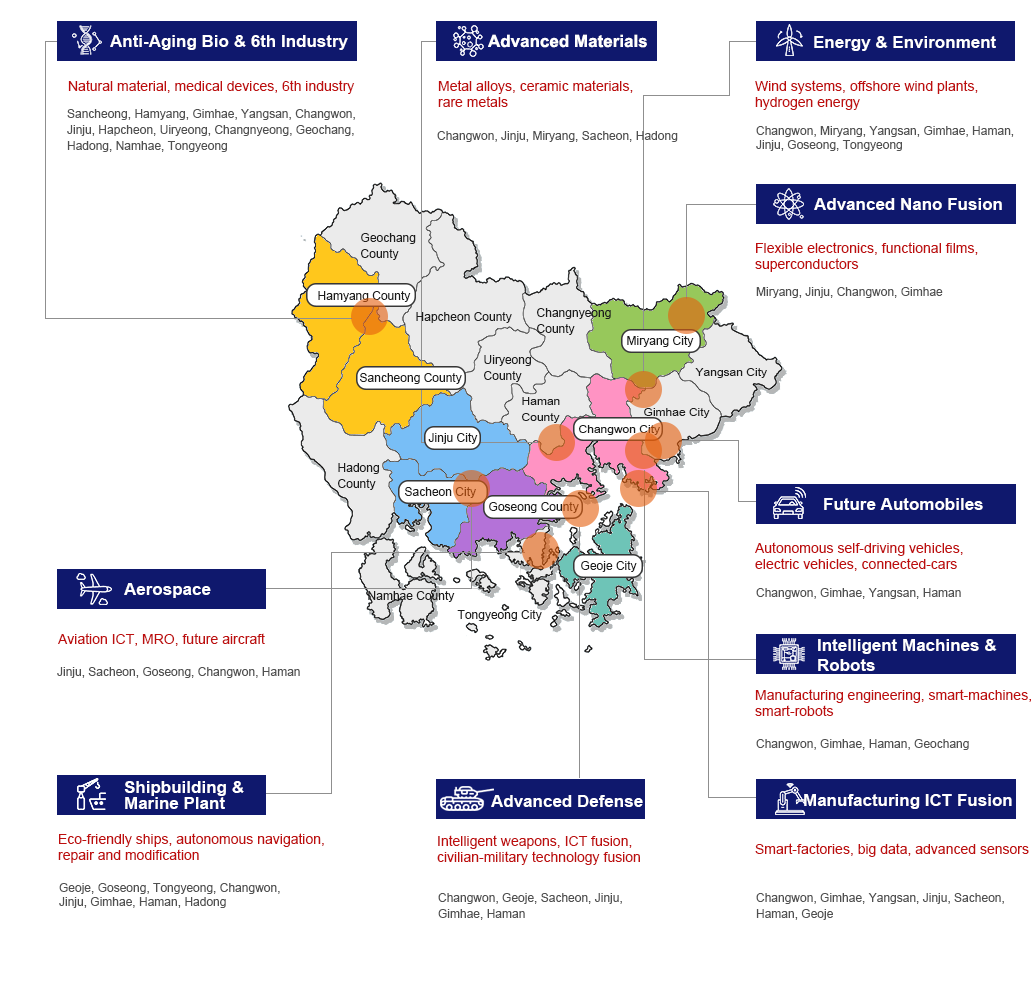
Diverse and Specialized Industrial Bases by Region